Butterfly Succulent 3D Paper Cutting File Review
As a designer who constantly bridges the gap between digital assets and tangible textiles, I approach every new file with a healthy dose of skepticism. When I first opened the Butterfly Succulent 3D Paper Cutting File, my immediate thought was how to translate this intricate, layered paper aesthetic into a durable machine embroidery design. The original description promises a refreshing and alluring succulent plant accompanied by beautiful butterflies, capturing the essence of Spring. For those of us in the craft business, however, the real question is not just about visual beauty, but about structural integrity when converted from a 3D SVG into stitches.
This review evaluates the Butterfly Succulent 3D Paper Cutting File specifically through the lens of an embroidery digitizer and product creator. Whether you are an Etsy seller looking for your next bestseller or a hobbyist planning a personalized gift, understanding how this design behaves on fabric is crucial before you commit thread to needle.
Translating Layered Depth to Stitch Density
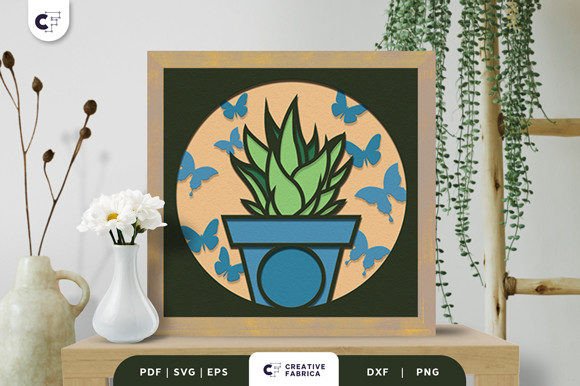
The primary challenge and opportunity with this specific asset is its origin as a 3D SVG. Paper cutting files rely on physical separation and shadow to create depth. In embroidery, we must replicate that dimension using stitch density, thread colors, and texture rather than physical gaps. Upon analyzing the layout, the succulent leaves present a natural opportunity for layered applique design or varied fill stitch patterns. The organic curves of the plant are forgiving, which is excellent for digitizing, but the accompanying butterflies require precision.
If you are adapting this for a sweatshirt embroidery project or custom apparel, you cannot simply auto-digitize the vector lines. The "3D" effect must be reimagined. I recommend using a combination of satin stitch borders to define the leaf edges and lighter fill stitches for the centers to mimic the paper layers. The butterflies should perhaps be done in a denser satin or puff foam if you want true tactile depth, distinguishing them from the matte finish of the succulent. This translation turns a flat digital embroidery file into a premium handmade product that justifies a higher price point.
Real-World Application: The Canvas Tote Test
To truly judge the viability of the Butterfly Succulent 3D Paper Cutting File, I mentally prototyped it for a high-demand item in my shop: a natural canvas tote bag. Totes are fantastic for spring collections, but the fabric texture can be unforgiving. Canvas has a loose weave that can swallow fine details.
In this scenario, the design’s bold shapes work in its favor. Delicate running stitch details often get lost on textured fabrics, but the substantial form of a potted succulent holds up well. However, I would advise against tiny text or microscopic vein details within the leaves unless you are using a very tight stabilizer. For a commercial embroidery listing, clarity sells. Customers browsing mobile thumbnails need to instantly recognize the botanical theme. If the butterfly wings are too intricate for the chosen hoop size, simplify them. A clean, readable tote bag design will always outsell a muddy, over-complicated one.
This design also shines in baby embroidery applications. The soft, rounded nature of succulents feels safe and gender-neutral, making it perfect for nursery decor or blankets. Just ensure that if used for infant items, the back of the embroidery is covered or the stitch density is managed to prevent scratchiness. The "refreshing" mood mentioned in the product description translates beautifully to baby goods, offering a modern alternative to traditional floral motifs.
Fabric Limitations and Stabilizer Strategy
While the Butterfly Succulent 3D Paper Cutting File is versatile, it demands respect regarding substrate choice. Because this design likely involves multiple layers to achieve that 3D look, stitch count can accumulate quickly. I would exercise extreme caution when placing this on stretchy knits or thin performance fabrics without significant reinforcement.
- Stretchy Fabrics: Use a cut-away stabilizer and consider a fusible backing to prevent the succulent from distorting the garment shape.
- Dark Fabrics: The design relies on contrast. If stitching on black or navy, test your thread colors first. Pastel greens may require a white underlay to pop, otherwise, the "alluring" quality fades into the background.
- Curved Surfaces: Hooping caps or sleeves requires resizing. The vertical orientation of a potted plant can be tricky on a curved cap brim. You may need to isolate just the butterfly or a single succulent rosette for these small hoop sizes.
- Frequent Washing: Kitchen towels and aprons are ideal canvases, but they endure harsh laundering. Ensure your satin stitch columns are wide enough to anchor securely and avoid excessive jump stitches that could snag.
Commercial Value and Customer Perception
For creative entrepreneurs and small shop owners, the value of this asset lies in its trend relevance. Botanicals remain a staple, but the specific "paper cut" style adds a modern, artisanal twist that separates it from generic clip art. When creating printable mockups for your listings, emphasize the dimensional quality. Even if the final embroidered patch is flat, marketing it with the language of "3D" and "layered" sets an expectation of craftsmanship.
However, professionalism requires transparency. Always verify the licensing of the Butterfly Succulent 3D Paper Cutting File before selling finished products or digital derivatives. As makers, our reputation hinges on respecting intellectual property. Furthermore, customer trust is built on accurate representation. If your adaptation simplifies the design significantly to accommodate a 4x4 hoop, show photos of the actual stitched result, not just the digital rendering. Buyers appreciate seeing how the design assets perform in reality.
Essential Pre-Stitch Checklist for Makers
Before you list this as a holiday embroidery item or add it to your permanent collection, run through this practical validation process. These steps save time, thread, and potential refunds.
- Test on Scrap Fabric: Never stitch the final version first. Use a scrap of the exact material you intend to sell. Check for puckering around the pot base and leaf tips.
- Audit Stitch Density: Open the embroidery file in your software. Look for areas where fill stitches and satin borders overlap excessively. Reduce density in the center of leaves to prevent bulletproof stiffness.
- Contrast Check: View the design in grayscale. If the butterfly blends into the succulent without color, the definition is insufficient. Adjust values to ensure the silhouette reads clearly even in monochrome.
- Hoop Size Verification: Confirm the design fits your machine’s maximum field with adequate margin for the presser foot. Resizing complex designs can distort stitch angles; re-digitizing elements is often safer than stretching.
- Mockup Reality Check: Create a black and white mockup alongside a full-color version. This helps identify whether the design relies too heavily on color variation rather than structural stitching.
- Licensing Confirmation: Double-check if the source allows for commercial use of modified derivatives. Document this permission for your business records.
Final Thoughts on Adaptation
The Butterfly Succulent 3D Paper Cutting File offers a beautiful starting point for spring collections and nature-inspired merchandise. Its strength lies in its organic geometry and inherent sense of depth, which challenges us to be better digitizers. By treating the transition from SVG to stitch as a creative reinterpretation rather than a direct copy, you elevate the final product from a simple graphic to a piece of textile art.
Remember that successful commercial embroidery is about balancing aesthetics with durability. Whether you are crafting a personalized gift for a plant lover or stocking your Etsy shop with seasonal apparel, let the fabric guide your adaptation. Respect the limitations of the medium, test rigorously, and this design can become a reliable, profitable asset in your creative toolkit. Always prioritize the tactile experience of the finished product over the digital perfection of the screen, and your customers will feel the difference in every stitch.